
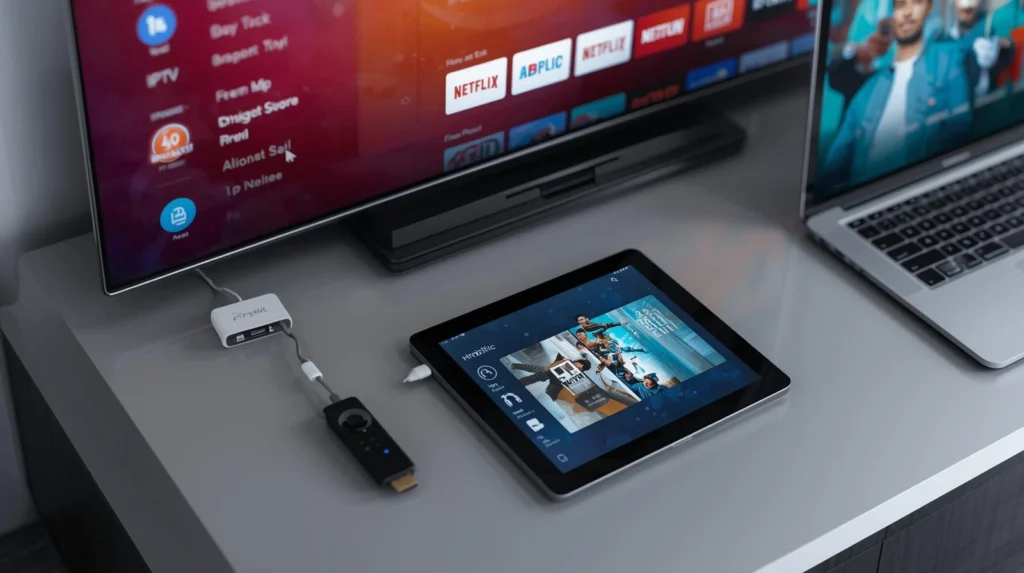
Tablets have become a popular choice for watching online entertainment because they combine a larger screen with the portability of a mobile device. With a stable internet connection and a compatible application, a tablet can provide access to live television, sports, movies, series, news, and international content from almost anywhere.
For viewers who want more flexibility than a traditional television setup, IPTV for Tablet can be a convenient option. IPTV delivers television content through the internet, allowing compatible applications to display available live and on-demand programming directly on a tablet.
Whether you use an Android tablet or an iPad, the quality of your experience depends on several factors, including the IPTV service, compatible application, internet connection, and capabilities of your device.
This guide explains how IPTV works on tablets, why people use it, the main benefits, supported platforms, important features, and how to choose a suitable IPTV service.
What Is IPTV for Tablet?
IPTV stands for Internet Protocol Television. It is a method of delivering television content through an internet connection rather than traditional cable, satellite, or terrestrial broadcasting.
IPTV for Tablet refers to accessing IPTV content through a compatible application on a tablet device.
Depending on the IPTV provider and the content rights available in your region, a service may offer:
- Live TV channels
- Sports programming
- Movies
- TV series
- News
- International channels
- Entertainment
- Video-on-demand content
The exact selection varies between providers, subscriptions, applications, and regions.
How Does IPTV Work on a Tablet?
Using IPTV on a tablet generally requires a reliable internet connection, a compatible IPTV application, and valid access information from the service provider.
After installing the appropriate application, users can enter the required login details or playlist information. The application then connects to the service and loads the available content.
A typical setup involves:
- Connect the tablet to a reliable Wi-Fi or mobile internet connection.
- Install a compatible IPTV application.
- Enter the required service information.
- Allow the application to load the available content.
- Browse the available categories.
- Select a channel, movie, or series to start watching.
The exact setup depends on the tablet operating system, IPTV application, and service provider.
Why Use IPTV on a Tablet?
Portability
One of the biggest advantages of a tablet is portability.
Unlike a traditional television, a tablet can easily be carried from one room to another or used while traveling, provided you have a suitable internet connection and the service permits use on the device.
Larger Screen Than a Smartphone
A tablet provides a larger display than most smartphones while remaining much easier to carry than a laptop or television.
This makes it a practical middle ground for viewers who want portable entertainment without relying on a small phone screen.
Convenient Viewing
A tablet can be used without additional television equipment.
Once the IPTV application is installed and configured, viewers can access available content directly from the device.
Flexible Entertainment
A tablet allows users to watch IPTV while using the device for other everyday activities.
For example, you can switch between IPTV and browsing, communication, or other applications when appropriate.
Main Benefits of IPTV for Tablet
Access to Multiple Content Categories
IPTV can bring different types of entertainment together in one application.
Depending on the provider, users may find live television, sports, movies, series, news, and international programming.
This variety can make IPTV suitable for viewers with different interests.
HD and High-Quality Streaming
Many IPTV services provide streams in different resolutions, including HD and Full HD. Some content may also be available in higher resolutions when supported.
The actual quality depends on the source stream, IPTV service, application, tablet hardware, display, and internet connection.
Internet-Based Viewing
Because IPTV uses an internet connection, the IPTV service itself does not require a traditional satellite dish.
For tablet users, this makes the setup particularly convenient because the device already connects to the internet through Wi-Fi or, on supported models, mobile data.
Portable Entertainment
A tablet can provide access to IPTV from different locations.
At home, you can use Wi-Fi, while compatible cellular tablets may also connect through mobile data when appropriate.
Users should be aware that streaming video over mobile data can consume significant amounts of data.
What Types of Content Can You Watch?
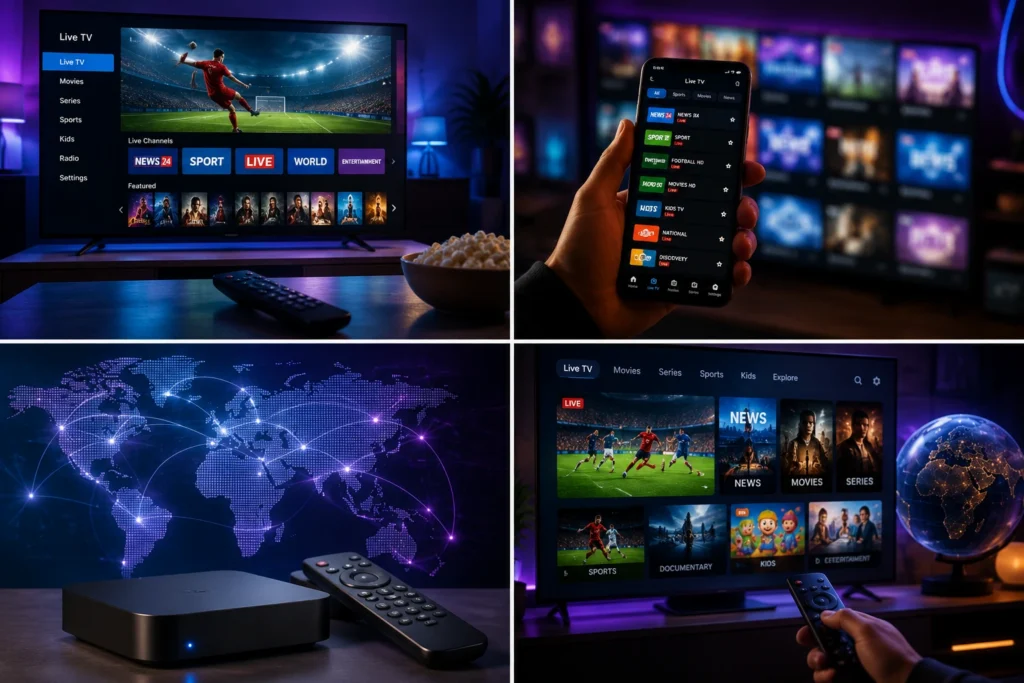
The exact content available depends on the IPTV provider, subscription, and region. However, services commonly organize content into several categories.
Live TV
Live television is one of the main uses of IPTV.
Depending on the service, viewers may have access to news, entertainment, lifestyle, documentary, and other live channels.
Sports
Sports fans may use IPTV to access relevant sports channels and live programming.
For live events, a stable internet connection is especially important because interruptions can affect the viewing experience.
Movies
Movie lovers may prefer services that provide movie channels or available on-demand libraries.
An organized catalog can make it easier to discover content without relying entirely on scheduled broadcasts.
TV Series
Some IPTV services include on-demand television series.
The selection varies between providers, so viewers should check the available content before subscribing.
International Channels
International programming can be useful for viewers who follow content from different countries or languages.
Depending on the service and applicable licensing, international categories may include news, entertainment, sports, and general television channels.
IPTV Apps for Tablets
The IPTV application is an important part of the viewing experience.
It acts as the interface used to access and play compatible IPTV content. Different applications offer different features and may support different access methods.
When choosing an IPTV application for your tablet, consider:
- Compatibility with your operating system
- Playlist support
- Login support
- Electronic Program Guide
- Search functionality
- Playback controls
- Subtitle support
- Multiple quality options
- Simple navigation
A well-designed application can make it much easier to browse channels and on-demand content.
IPTV for Android Tablets
Android tablets support a wide range of applications through the Android ecosystem.
This can give users flexibility when choosing an IPTV player, although application availability can vary depending on the Android version, device model, and region.
Before installing an IPTV application, check its requirements and make sure it supports your tablet.
IPTV for iPad
iPad users can also access IPTV through compatible applications available for Apple’s platform.
Because iPad applications and installation requirements can differ from Android, it is important to check whether your preferred IPTV player supports the specific iPad model and iOS or iPadOS version you use.
What Makes a Good IPTV for Tablet Experience?
Stable Streaming
A stable internet connection is essential for smooth IPTV playback.
Buffering, freezing, and unexpected interruptions can make watching live television frustrating, particularly when using high-resolution streams.
Good Picture Quality
Your tablet’s display can make a significant difference to how IPTV content looks.
If your device has a high-resolution screen, you may want to use a service and application that can provide suitable high-quality streams when available.
Easy Navigation
A good IPTV application should make it easy to find channels and content.
Clear categories, search functionality, organized playlists, and an electronic program guide can all improve the viewing experience.
Efficient Battery Usage
Streaming video can consume significant battery power.
For longer viewing sessions, keeping the tablet sufficiently charged or connected to a suitable power source can prevent interruptions.
How to Choose the Best IPTV for Tablet
Choosing an IPTV service should involve more than comparing subscription prices.
Check Device Compatibility
Make sure the IPTV service and application support your Android tablet or iPad.
Review the Content
Think about what you actually want to watch. Sports fans may prioritize live sports, movie lovers may focus on on-demand content, and international viewers may need specific regions or languages.
Consider Streaming Quality
Check the available video resolutions and make sure your tablet and internet connection can handle the quality you want.
Check Internet Requirements
A reliable Wi-Fi or mobile connection is essential for consistent streaming.
If you plan to use mobile data, check your data allowance because video streaming can consume a substantial amount of data.
Look at Customer Support
Good customer support can be useful if you need help with application compatibility, setup, or service-related questions.
Review Service Terms
Before purchasing, check the subscription conditions, supported devices, service policies, and content licensing.
Choosing a provider with the appropriate rights to distribute its content is important.
Internet Connection and IPTV on Tablet
Your internet connection has a direct effect on IPTV performance.
Wi-Fi is generally the preferred option for regular home streaming, while mobile data can provide flexibility when Wi-Fi is unavailable.
For a smoother experience:
- Use a strong Wi-Fi signal.
- Stay reasonably close to your router.
- Avoid unnecessary downloads while streaming.
- Reduce network congestion when possible.
- Use a reliable mobile connection when Wi-Fi is unavailable.
- Choose a video quality suitable for your connection.
If several devices are using the same Wi-Fi network, available bandwidth may be divided between them.
Need Help Choosing IPTV for Tablet?
If you are unsure which IPTV application or service is suitable for your tablet, you can contact My Stream Nova for more information.
Contact My Stream Nova on WhatsApp
The My Stream Nova team can answer general questions about compatible tablets, applications, setup requirements, and subscription options.
How to Set Up IPTV on a Tablet
Once you have confirmed that your tablet and IPTV application are compatible, the setup process is generally simple.
Start by connecting your tablet to a reliable Wi-Fi or mobile internet connection. Then install a compatible IPTV application from the appropriate official application store.
After opening the application, enter the login details, playlist information, or other authorized access details provided by your IPTV service. Once the content loads, you can browse the available categories and begin watching.
The exact steps may vary depending on the application and IPTV service, so always follow the relevant setup instructions.
How to Improve IPTV Performance on a Tablet
A few simple adjustments can help provide smoother playback and better overall performance.
Use a Strong Wi-Fi Connection
For home streaming, Wi-Fi is usually the most practical option.
Keep your tablet within a reasonable range of the router and avoid areas where the wireless signal is weak. A stable connection is more important than simply having a high advertised internet speed.
Keep the IPTV App Updated
Application updates can improve compatibility, fix bugs, and sometimes improve playback performance.
Check the official app store regularly for available updates.
Keep Your Tablet Updated
Operating system updates can also improve application compatibility and device performance.
Make sure your Android tablet or iPad is running a supported software version whenever possible.
Close Unnecessary Apps
Having many applications running at the same time can consume memory and battery.
If IPTV playback becomes less responsive, close applications you are not using and then restart the IPTV application.
How to Reduce IPTV Buffering on a Tablet
Buffering can happen for several reasons, including weak Wi-Fi, network congestion, high-resolution streams, application problems, or instability affecting a particular stream.
Check Your Internet Connection
Start by checking whether your connection is stable.
If other streaming applications are also experiencing interruptions, the problem may be related to your network rather than the IPTV application.
Move Closer to the Router
If your Wi-Fi signal is weak, moving closer to the router can improve connection quality.
Large walls, floors, and other electronic devices can sometimes interfere with wireless signals.
Reduce Network Usage
Other devices using the same connection may consume significant bandwidth.
Pause large downloads, cloud backups, or other high-bandwidth activities when watching IPTV.
Lower the Video Quality
If your connection cannot handle a high-resolution stream consistently, try switching to a lower available quality.
Moving from 4K or Full HD to HD, where available, can reduce bandwidth requirements and improve playback.
Check Another Channel
If only one channel is buffering while other content works normally, the issue may be related to that particular stream.
Testing another channel can help determine whether the problem affects the entire service.
Managing Mobile Data When Watching IPTV
Cellular tablets can provide IPTV access when Wi-Fi is unavailable, but users should be careful about data consumption.
Video streaming can use a significant amount of mobile data, especially at higher resolutions.
If you use IPTV over mobile data:
- Monitor your monthly data usage.
- Use Wi-Fi whenever practical.
- Lower the video quality when necessary.
- Avoid leaving high-resolution streams running unnecessarily.
- Check your mobile provider’s data limits.
These simple habits can help prevent unexpected data usage.
How to Save Battery While Watching IPTV
Video streaming can place a considerable load on a tablet’s battery.
For longer viewing sessions, consider reducing screen brightness to a comfortable level and closing applications that are not being used.
If your tablet becomes warm during extended streaming, avoid covering it with blankets or other materials that could restrict ventilation.
Keeping the device at a comfortable operating temperature can help maintain stable performance.
Common IPTV Problems on Tablets
IPTV App Is Not Opening
If the application does not open correctly, restart the tablet and check whether an update is available.
You can also verify that the application supports your current Android or iPadOS version.
Content Is Not Loading
If the application opens but channels or other content do not appear, check your internet connection and verify that the service information has been entered correctly.
If the problem continues, contact your IPTV provider for assistance.
IPTV Keeps Freezing
Freezing can be caused by weak Wi-Fi, network congestion, insufficient bandwidth, application problems, or instability affecting a specific stream.
Try another channel and test your internet connection to identify the source.
Picture Quality Is Poor
If the image appears blurry or pixelated, check the available quality settings and your internet connection.
The stream itself may also have a lower resolution, so not every channel will provide the same picture quality.
IPTV Drains the Battery Quickly
Streaming video continuously can consume significant battery power.
Lowering screen brightness, closing unnecessary applications, and keeping the tablet connected to a suitable power source during long viewing sessions can help.
IPTV on Android Tablet vs iPad
Both Android tablets and iPads can provide convenient IPTV viewing, but their application ecosystems are different.
Android tablets can offer flexibility through the Android application ecosystem, while iPads provide a controlled application environment with software available through Apple’s platform.
The best choice depends on your preferred applications, device capabilities, screen size, operating system, and personal preferences.
Before choosing an IPTV application, always verify that it supports your specific tablet model and operating system version.
Tablet vs Smartphone for IPTV
A tablet can be more comfortable for IPTV than a smartphone because it generally provides a larger display.
A smartphone is easier to carry, but the smaller screen may not provide the same viewing experience for long movies, sports events, or television programs.
For users who want portability without sacrificing too much screen size, a tablet can offer a useful balance between convenience and viewing comfort.
Tablet vs Smart TV for IPTV
A Smart TV is generally better suited to traditional home viewing because it provides a larger screen and a dedicated television environment.
A tablet, on the other hand, offers greater portability and can be used in different locations.
For everyday living-room entertainment, a Smart TV may be more comfortable. For flexible viewing around the home or while traveling, a tablet can be more convenient.
Frequently Asked Questions
Can I watch IPTV on a tablet?
Yes. You can watch IPTV on a compatible Android tablet or iPad using a suitable IPTV application and valid service information.
Does IPTV work on both Android and iPad?
Yes, compatible IPTV applications are available for both platforms, although the available applications and setup methods can differ.
Can I use IPTV on a tablet without Wi-Fi?
If your tablet supports cellular connectivity, you may be able to use IPTV through mobile data. Keep in mind that video streaming can consume significant amounts of data.
Can I watch IPTV in HD on a tablet?
Yes, HD streaming may be available when the IPTV service, application, tablet, and internet connection support it.
Why does IPTV keep buffering on my tablet?
Buffering can be caused by weak Wi-Fi, network congestion, insufficient bandwidth, high-resolution streaming, application issues, or problems with a particular stream.
How can I improve IPTV quality on my tablet?
Use a stable internet connection, keep the application and tablet software updated, reduce network congestion, and choose a video quality appropriate for your connection.
Does IPTV use a lot of mobile data?
Yes. Video streaming can consume substantial mobile data, particularly when watching HD or higher-resolution content for extended periods.
Can I connect my tablet to a TV?
Depending on the tablet and television, you may be able to connect them using compatible wireless casting, adapters, or other supported display technologies.
Why Choose My Stream Nova?
A good IPTV experience depends on more than the tablet itself. The service, application, internet connection, and device compatibility all contribute to smooth viewing.
My Stream Nova provides IPTV service options for viewers who want to access available television and entertainment content through compatible devices and applications.
Whether you prefer watching IPTV on an Android tablet, iPad, Smart TV, or another supported device, checking compatibility before subscribing can help you avoid unnecessary setup issues.
If you are unsure whether your tablet is suitable for the service, contacting the provider before purchasing can help clarify compatibility and setup requirements.
Get Help With Your IPTV Setup
Need help choosing an IPTV application or setting up IPTV on your tablet?
Contact My Stream Nova on WhatsApp
The My Stream Nova team can provide general guidance about compatible applications, devices, setup requirements, and subscription options.
Conclusion
IPTV for Tablet provides a flexible way to access internet-based television and entertainment from a portable device.
With a compatible IPTV application, reliable internet connection, and suitable service, viewers can enjoy live TV, sports, movies, series, news, and other available content without depending on a traditional television setup.
For the best experience, check device compatibility, maintain a stable connection, keep your software updated, and choose a streaming quality that matches your network.
Whether you use an Android tablet or iPad, the right combination of device, application, service, and internet connection can make IPTV a convenient option for portable entertainment.